Engineered load transfer and settlement control for weak soils
At Anmol Piling & Steel Structures L.L.C., we offer advanced stone column installation services to strengthen soft soils and enhance load-bearing performance. This technique is especially effective in Dubai’s challenging ground conditions, where loose sand and high water tables often pose a threat to structural stability.
Stone columns allow builders to construct on sites that would otherwise require expensive deep foundations, offering a cost-effective, time-efficient ground improvement method.
Plan your foundation smarter — talk to our soil improvement team.
What Are Stone Columns and How Do They Work?
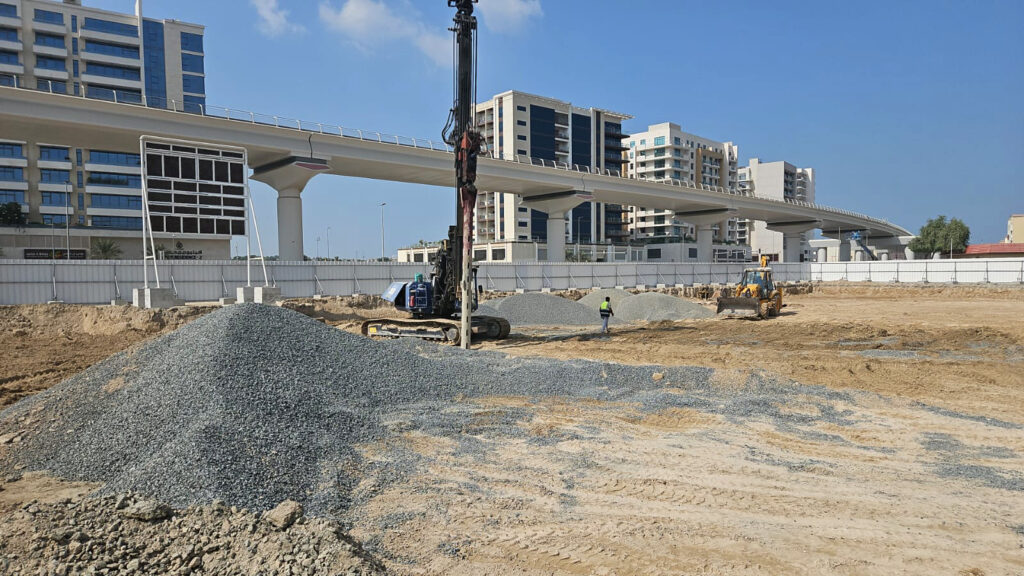
Stone columns are vertical inclusions constructed by inserting crushed stone or gravel into the ground using vibration or displacement methods. These columns increase the stiffness of the soil, improve drainage, and distribute structural loads more effectively.
They don’t replace foundations — they enhance the ground so conventional shallow foundations or slabs can perform reliably.
How they improve ground performance:
- Distribute heavy structural loads over weak soils
- Accelerate consolidation in clayey or saturated soils
- Improve drainage and reduce excess pore water pressure
- Minimize long-term settlement and soil liquefaction risk
Where Stone Columns Are Used in the UAE
Our stone column systems are designed for projects where deep foundations are unnecessary, but weak soils still require stabilization.
They are ideal for:
- Warehouse and logistics platforms on reclaimed land
- Low- to mid-rise buildings with moderate load demands
- Road embankments, bridge approaches, and airport pavements
- Residential and commercial plots in soft or loose sandy soils
- Projects with tight timelines or budget limits
We tailor every installation to site-specific geotechnical conditions.
Why Stone Columns Are Effective in Dubai’s Soil
Dubai’s natural ground often includes:
- Loose, cohesionless sand
- Soft silty or clayey fills
- Reclaimed coastal land with variable density
Stone columns are particularly effective in these conditions because:
- They don't rely on high bearing strata — they densify the upper layers
- They’re quick to install with minimal spoil generation
- They help speed up consolidation in saturated soils
Our team uses vibro-replacement or dry bottom-feed techniques based on site access, soil saturation, and required performance.
Our Stone Column Installation Process
Geotechnical Evaluation
Review soil reports and design load requirements to confirm stone column suitability.
Grid Layout & Spacing Design
Determine column diameter, depth, and spacing based on project load and settlement limits.
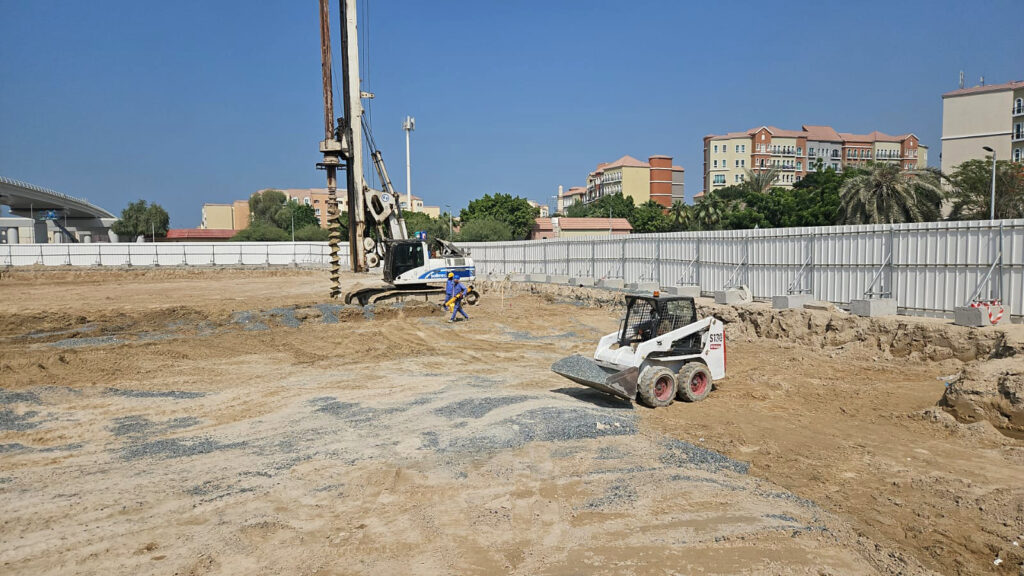
Installation Using Vibro Equipment
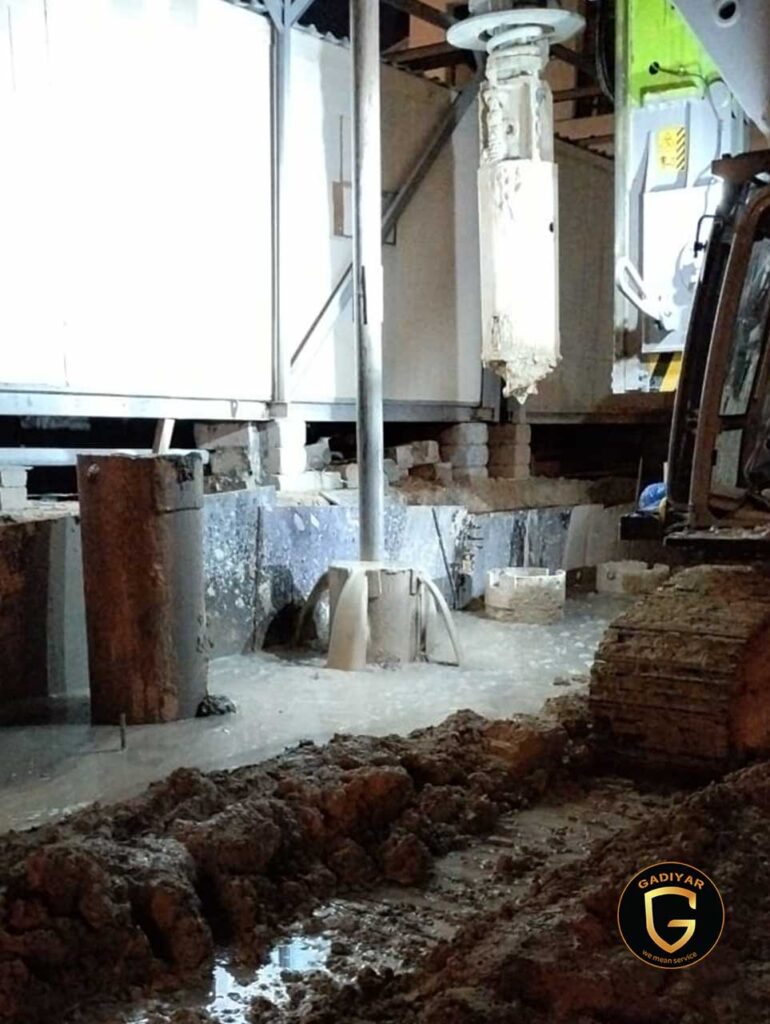
Insert columns using vibroflot or dry displacement tools to required depth with engineered crushed stone.
Layered Compaction
Compact stone in lifts to ensure uniform stiffness and density.
Testing & Validation
Conduct plate load tests or modulus of subgrade reaction checks for performance validation.

Benefits of Using Stone Columns for Soil Improvement
Increased load capacity on soft soils
Allows use of shallow foundations by improving soil stiffness and vertical strength.
Reduces differential settlement
Especially useful under large slab areas like warehouses or logistics hubs.
Enhances drainage and reduces pore pressure
Essential for soft clays or waterlogged reclaimed land.
Faster construction timelines
Installation is quick and clean — ideal for fast-track commercial projects.
Lower cost compared to deep foundations
Eliminates the need for piling in mid-load structures, reducing total project spend.
Technical Notes & Capabilities
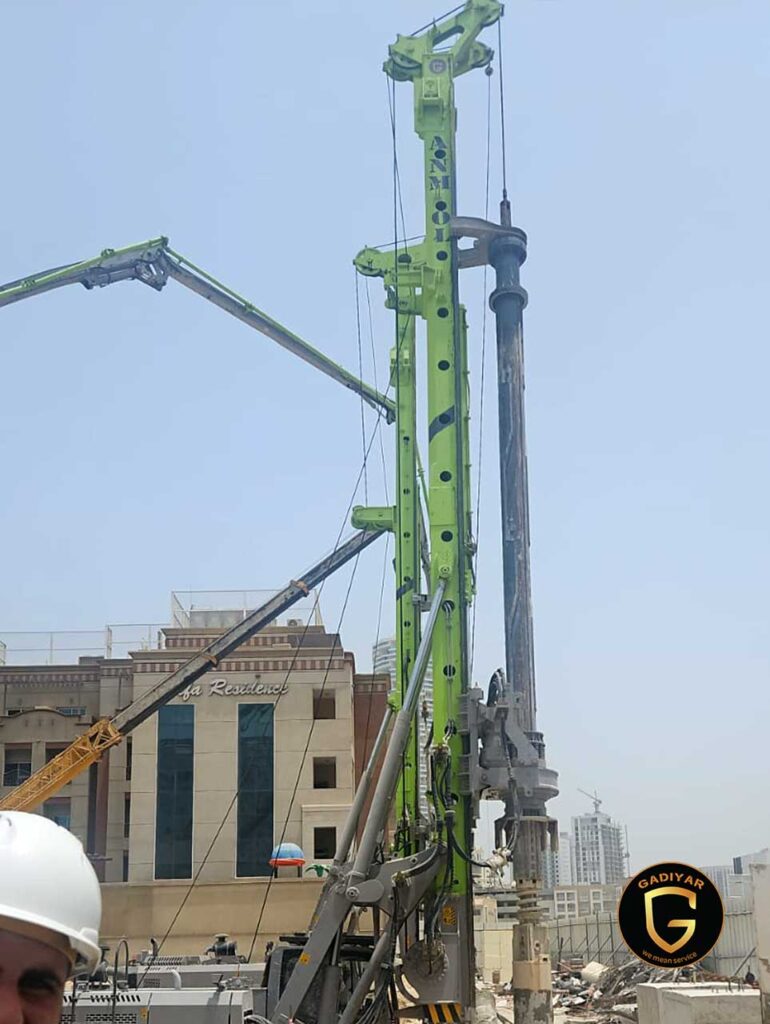
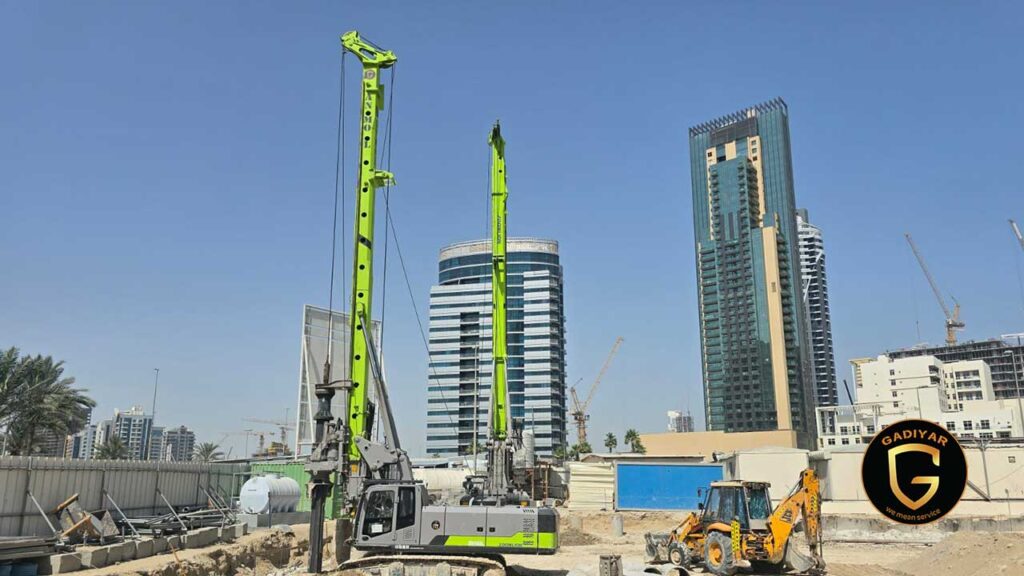
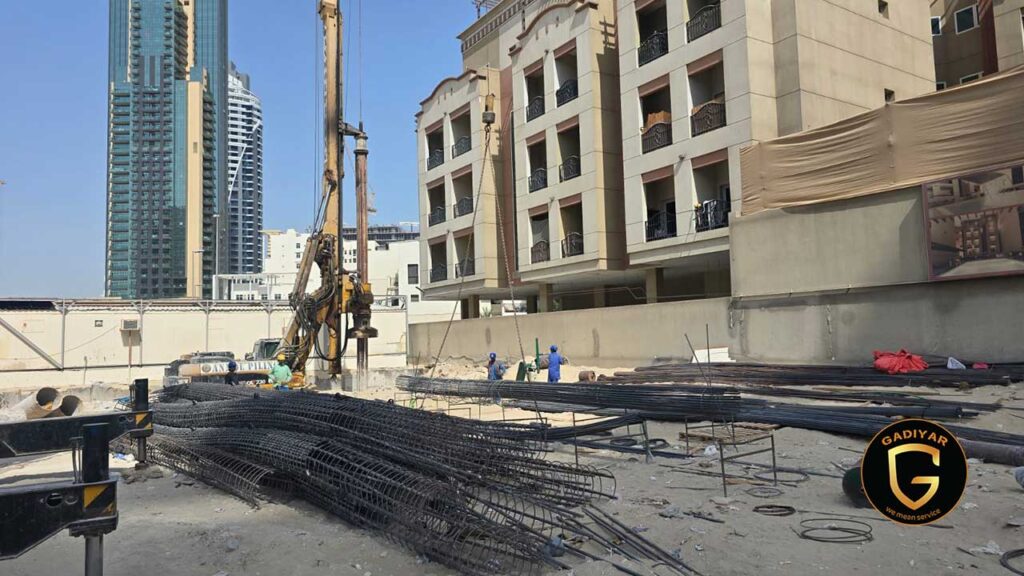
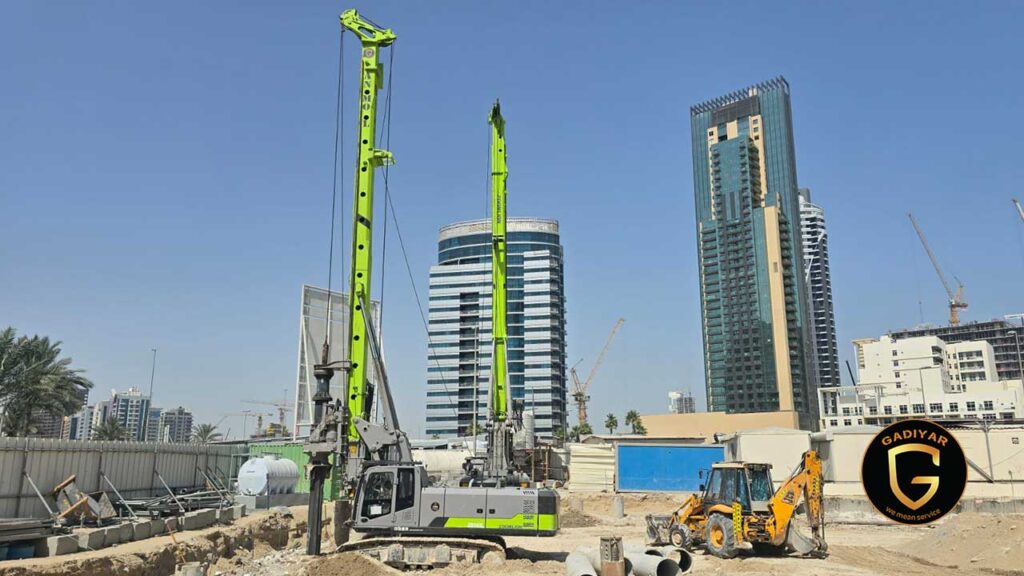
We operate modern vibro-replacement rigs suited for various ground conditions, including limited-access urban plots. Our design and execution follow:
- International soil improvement standards (e.g., EN, BS codes)
- Dubai Municipality and Trakhees compliance
- Real-time monitoring for depth, compaction, and stone consumption
- QA/QC with post-installation testing and reports